Rowlett Leak Detection Experts
A hidden plumbing leak can waste water without leaving an obvious puddle. You may notice an unexplained increase in your water bill, a damp area, changing water pressure, a sound of running water, or moisture appearing where it shouldn’t.
Rowlett Leak Detection helps homeowners identify possible sources of water leaks and understand what may be happening before unnecessary repair work begins.
Whether the suspected problem is beneath a slab, underground, inside a wall, or connected to a water line, the first step is determining where the water is coming from.
Request Your Leak Inspection
Suspect a Hidden Leak? Start Here
Not every plumbing leak is immediately visible.
A dripping faucet or leaking supply connection is usually easy to spot. A leak beneath concrete, underground, or inside a wall can be much harder to identify. Water may travel away from its actual source before becoming visible, which can make the location of the damage misleading.
Some warning signs that deserve attention include:
- An unexpected increase in water usage
- A water meter that continues moving when water is not being used
- Damp or unusually wet areas
- Water stains on walls or ceilings
- Unexplained moisture around floors or plumbing areas
- The sound of running or dripping water when fixtures are off
- Changes in normal water pressure
- Water appearing outdoors without an obvious source
These signs do not automatically prove that you have a hidden leak. They can, however, indicate that further investigation is worthwhile.
If you cannot identify the source yourself, professional leak detection can help narrow down where the problem is located.
Where Can a Hidden Plumbing Leak Occur?
A leak does not always occur where the water eventually becomes visible. Understanding the possible locations can help you describe the problem more accurately when requesting an inspection.
Slab Leaks
A slab leak involves plumbing located beneath or within a concrete foundation.
Because the plumbing is concealed, the first indication may be something indirect—such as unexplained water usage, moisture, unusual sounds, or changes in water pressure.
Locating the suspected source before concrete is opened can help determine where further investigation or repair may be necessary.
Underground Water Leaks
Water lines running underground can develop leaks that are difficult to see from inside the home.
Possible signs include:
- Wet areas in the yard
- Unexplained water usage
- Soil that remains unusually damp
- Water appearing in an unexpected outdoor location
- A water meter that indicates continued water use
An underground leak can be particularly difficult to locate because the water may travel through soil before reaching the surface.
Water Line Leaks
A water-line leak may occur along plumbing that supplies water to your home.
Depending on its location, the leak may be visible or completely concealed.
If you suspect a problem with a water line but cannot identify the source, leak detection can help determine where further inspection should be concentrated.
Leaks Inside Walls or Other Concealed Areas
A wall or ceiling stain does not necessarily identify the exact source of the leak.
Water can move through building materials before appearing at a visible location. That’s why the place where you first notice moisture may not be the place where the plumbing is actually leaking.
Finding the source is an important part of determining the appropriate next step.
Faucet and Fixture Leaks
Some leaks are much easier to identify than hidden plumbing leaks.
A dripping faucet, leaking connection, running toilet, or visible supply-line problem may require a straightforward plumbing repair rather than specialized leak detection.
The goal is to distinguish between a visible plumbing problem and a leak whose source remains concealed.
How to Tell If You May Have a Hidden Water Leak
Before calling for an inspection, there are a few basic observations you can make around your property.
1. Watch the Water Meter
Turn off faucets, appliances, and other normal sources of water use.
Then observe the meter.
If it continues to indicate water usage while everything is shut off, that can be a reason to investigate further.
A meter test can help determine whether water is being used somewhere in the system, but it doesn’t identify the location of the leak.
2. Check for Visible Moisture
Look around:
- Under sinks
- Around toilets
- Near the water heater
- Around exposed plumbing connections
- Along walls and ceilings
- Around areas where flooring feels unusually damp
Visible moisture can provide an important clue, but it may not reveal the original source.
3. Pay Attention to Unusual Sounds
A sound of running or dripping water when all fixtures are turned off may deserve investigation.
The sound alone cannot confirm a leak, but it can help indicate that water may be moving somewhere it shouldn’t.
4. Look at Your Water Usage
An unexplained increase in water consumption can have several causes.
If your normal usage pattern has changed without an obvious reason, check visible fixtures and plumbing first. If you still cannot explain the change, hidden leakage may need to be considered.
5. Notice Changes in Water Pressure
Changes in normal water pressure can have multiple causes.
They should not automatically be attributed to a leak, but when pressure changes occur together with other warning signs, they can provide useful information during an inspection.
Why Finding the Leak Location Matters
Don’t Start Opening Walls or Concrete Based Only on a Guess
A hidden leak can be frustrating because the visible evidence doesn’t always point directly to its source.
For example, moisture appearing along a wall doesn’t necessarily mean the pipe directly behind that spot is leaking. Water can move through building materials before becoming visible.
The same principle applies to underground and slab leaks.
That’s why finding and narrowing down the suspected source before beginning invasive work can be valuable.
A proper leak investigation should focus on determining:
- What is causing the suspected water loss
- Whether a leak is actually present
- Where the source is likely located
- What additional investigation may be necessary
- What repair or next step may be appropriate
Leak detection is about answering those questions before assuming the repair.
How Professional Leak Detection Works
The exact diagnostic approach depends on the type and location of the suspected leak.
A typical investigation may begin with the symptoms you’ve noticed and then move toward testing and source identification.
Initial Assessment
The inspection starts with the information available:
- Where moisture was noticed
- Whether water usage has changed
- Whether the water meter is moving
- Whether there are unusual sounds
- Whether pressure has changed
- Whether the problem appears indoors or outdoors
These details help establish where to begin looking.
Visual Inspection
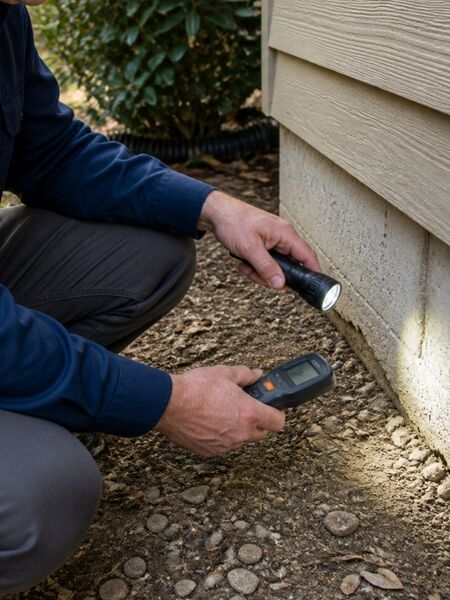
Visible plumbing, fixtures, connections, moisture and other accessible areas can be checked for obvious signs of leakage.
If the source is visible, specialized detection may not be necessary.
Water Meter and Usage Checks
A meter can provide useful information about whether water is moving through the system when normal fixtures are not being used.
This can help distinguish a possible hidden leak from a problem that is already visible.
Pressure or Isolation Testing
Pressure or isolation testing can help determine whether a particular section of the plumbing system is maintaining pressure as expected.
The results can provide additional information when the source of water loss is not immediately visible.
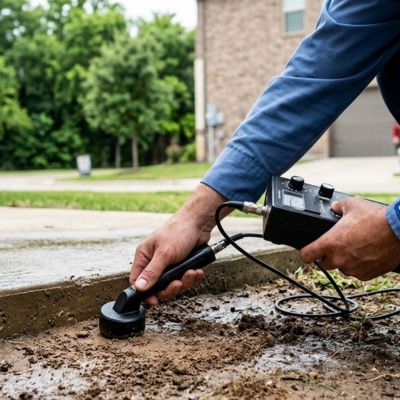
Acoustic or Electronic Detection
Specialized detection equipment can sometimes help identify signals associated with escaping water or other changes within a plumbing system.
The appropriate technology depends on the suspected leak, the plumbing configuration, accessibility, and the conditions at the property.
No single detection method is appropriate for every leak.
Our Leak Detection Process
01
Tell Us What You're Seeing
Start with the symptoms you’ve noticed.
An unexplained water bill, damp area, running-water sound, pressure change, or outdoor moisture can all provide useful clues.
02
Identify Visible Sources
Accessible fixtures, connections and plumbing areas can be checked before assuming the problem is hidden.
03
Determine Whether Further Testing Is Needed
If the source isn’t obvious, additional diagnostic work may be appropriate depending on the suspected location and type of leak.
04
Narrow Down the Source
The purpose of leak detection is to determine where the suspected leak is located rather than simply responding to the first visible sign of water.
05
Explain the Finding
Once the source has been identified or narrowed down, the homeowner should understand what was found and what the next step involves.
06
Discuss the Next Step
Leak detection and leak repair are not necessarily the same thing.
Depending on the situation, the next step may involve plumbing repair, additional investigation, access to a concealed area, or another appropriate solution.
Slab Leak Detection in Rowlett
A suspected slab leak can be especially concerning because the plumbing is concealed beneath or within a concrete foundation.
You may notice:
- Unexplained water usage
- Damp areas
- Unusual sounds
- Changes in water pressure
- Moisture around flooring
- Other unexplained signs of water loss
None of these symptoms alone proves that a slab leak exists. Other plumbing or building issues can produce similar signs.
The purpose of leak detection is to investigate the symptoms and determine whether a leak is present and where the suspected source is located.
Why location matters
Opening concrete without first narrowing down the likely source can lead to unnecessary exploratory work.
Accurate leak location can help determine where further plumbing work needs to be focused.
Underground Water Leak Detection
Not every water leak announces itself inside the house.
A buried water line can leak below the surface, allowing water to move through the surrounding soil before becoming noticeable.
Possible warning signs include:
- Persistent wet ground
- Unexplained water usage
- An active water meter when normal water use has stopped
- Unexpected water accumulation
- A noticeable change in an area of the yard
Outdoor moisture can also have other causes, including irrigation, drainage, weather, or surface water.
That is why the location and circumstances of the moisture matter.
If the water source cannot be identified visually, leak detection can help determine whether a concealed plumbing leak should be investigated.
Water Line Leak Detection
Water-line leaks can occur in locations that aren’t immediately accessible.
A suspected water-line problem may be associated with unexplained water loss, pressure changes, moisture, or other symptoms.
The first objective is to determine whether the plumbing system is losing water and, if so, where the problem is likely located.
Once the source has been narrowed down, the appropriate repair can be considered.
What Happens After a Leak Is Found?
Finding the leak is only one part of the process.
The appropriate next step depends on where the leak is located, what caused it, and how accessible the plumbing is.
Depending on the circumstances, the next stage may involve:
- Repairing an accessible plumbing connection
- Opening a specific area to reach concealed plumbing
- Excavating an underground section
- Repairing or replacing damaged plumbing
- Additional diagnostic testing
- Discussing different repair approaches
Leak detection should not automatically be treated as a guarantee that a particular repair method will be required.
The findings should be evaluated before deciding what work is appropriate.
How Much Does Leak Detection Cost in Rowlett, TX?
There isn’t one appropriate price for every leak investigation.
The cost can depend on factors such as:
- The type of suspected leak
- Whether the source is visible
- The accessibility of the plumbing
- Whether the leak is under a slab or underground
- The amount of diagnostic work required
- Whether additional testing is necessary
- Whether repair work is performed separately
Before approving service, ask what the leak-detection fee includes and whether any additional testing or repair is charged separately.
When Should You Call a Leak Detection Professional?
Consider arranging an inspection when you have an unexplained plumbing symptom that you cannot locate yourself.
Examples include:
An unexplained increase in water usage
Especially when your normal household usage hasn’t changed.
The water meter continues moving
If normal water use has stopped but the meter still indicates water consumption, further investigation may be appropriate.
You hear water running
A persistent sound of water when fixtures are off can be a useful warning sign.
You notice unexplained moisture
Damp flooring, walls, ceilings, or outdoor areas can have several causes, including concealed plumbing leaks.
You suspect a slab or underground leak
These locations can be difficult to investigate visually because the plumbing isn’t readily accessible.
What Can You Check Yourself Before Calling?
There are a few simple checks that can provide useful information without attempting a plumbing repair.
Check visible fixtures
Look at faucets, toilets, exposed connections and accessible plumbing.
Check the water meter
With normal water use stopped, observe whether the meter continues to indicate usage.
Look for moisture
Check areas where plumbing is accessible and note where moisture is appearing.
Write down the symptoms
Note when you first noticed the problem and whether it changes at particular times.
Don’t start opening walls or concrete
If the source isn’t obvious, avoid unnecessary demolition based only on a guess.
The information you gather can help make a professional inspection more efficient.
Leak Detection for Rowlett Homes
Homes in Rowlett can have plumbing systems with both accessible and concealed components.
A homeowner may encounter a visible fixture leak, an underground water-line problem, or a suspected leak beneath a concrete slab.
The important point is that the visible symptom doesn’t always identify the actual source.
That’s why our content and service approach focuses first on understanding the symptom and locating the suspected source before assuming what needs to be repaired.
If you are unsure whether your situation requires leak detection, describe what you’re seeing and ask what type of inspection may be appropriate.
Before You Book Leak Detection
A few questions can help you understand the scope of the service before work begins.
Ask what the detection service includes.
Find out what type of inspection or testing is covered by the quoted service.
Ask whether repair is included.
Leak detection and plumbing repair may be separate services.
Ask what happens if the source cannot immediately be confirmed.
Additional testing may sometimes be necessary depending on the circumstances.
Ask how the suspected location will be communicated.
You should understand what the inspection found and what the recommended next step is.
Ask about additional charges.
Clarify whether additional testing, repair, excavation, restoration, or other work is priced separately.
Good communication before the work begins can prevent misunderstandings later.
Areas We Cover
From the shaded streets near Pecan Grove Park to the waterfront homes tucked along Shorewood Park, our leak detection Rowlett TX team covers the full city, including 75030, 75088, and 75089. We regularly work in Dalrock, Kenwood Heights, and Waterview, and we’re familiar with the older plumbing near Rowlett Community Center as well as newer construction closer to the lake.
Rowlett Leak Detection also serves Garland, Rockwall, Sachse and surrounding communities.
Frequently Asked Questions
Common warning signs can include unexplained water usage, continued water-meter movement when normal water use has stopped, unexplained moisture, unusual running-water sounds, or changes in water pressure. These signs can have other causes, so they don’t automatically confirm a leak.
Turn off faucets and other normal water-using fixtures and observe the meter. If it continues indicating water usage, there may be water moving through the plumbing system. The meter test can help identify possible water loss but does not locate the source.
Yes. Plumbing can be located beneath or within a concrete foundation, making some leaks difficult to see directly. A suspected slab leak requires investigation to determine whether a leak exists and where its source may be.
Possible signs include unexplained water usage, moisture, unusual sounds, pressure changes, or other unexplained water-related symptoms. Similar signs can have other causes, so professional investigation may be necessary.
A concealed leak may be investigated using appropriate diagnostic methods depending on the plumbing system and circumstances. The visible location of moisture does not necessarily identify the exact location of the plumbing leak.
Not necessarily. Detection is the process of identifying or narrowing down the source of a leak. Repair is a separate step unless the specific service arrangement states otherwise.
The cost varies depending on the type and location of the suspected leak, accessibility, testing required, and other factors. Ask for the scope and pricing of the detection service before work begins.
It can, but wet ground can also result from irrigation, drainage, rain, or other causes. If the moisture is unexplained, checking water usage and the surrounding plumbing system can help determine whether a plumbing leak should be investigated.
Not always. If the source is clearly visible, a normal plumbing repair may be more appropriate. Professional leak detection is particularly useful when the source remains concealed or uncertain.
If you smell gas or suspect an active gas leak, treat the situation as an emergency. Avoid flames and electrical switches, leave the area if necessary, and contact the appropriate gas utility or emergency service according to local safety guidance. Do not wait for a routine plumbing appointment to address an active gas emergency.
Need Help Finding a Hidden Leak?
An unexplained water bill, damp area, running-water sound, or suspected slab or underground leak can be difficult to diagnose from the visible symptoms alone.
Rowlett Leak Detection provides information and leak-detection services for homeowners who need help determining where a suspected plumbing leak may be coming from.